Independent developer · Nantes, France

Godot Game
Developer.

Stéphane Morel

I build 2D gameplay in Godot, with a focus on modular architecture, adaptive enemies and maintainable systems.

GDScript · Gameplay Systems · Modular Architecture · Android
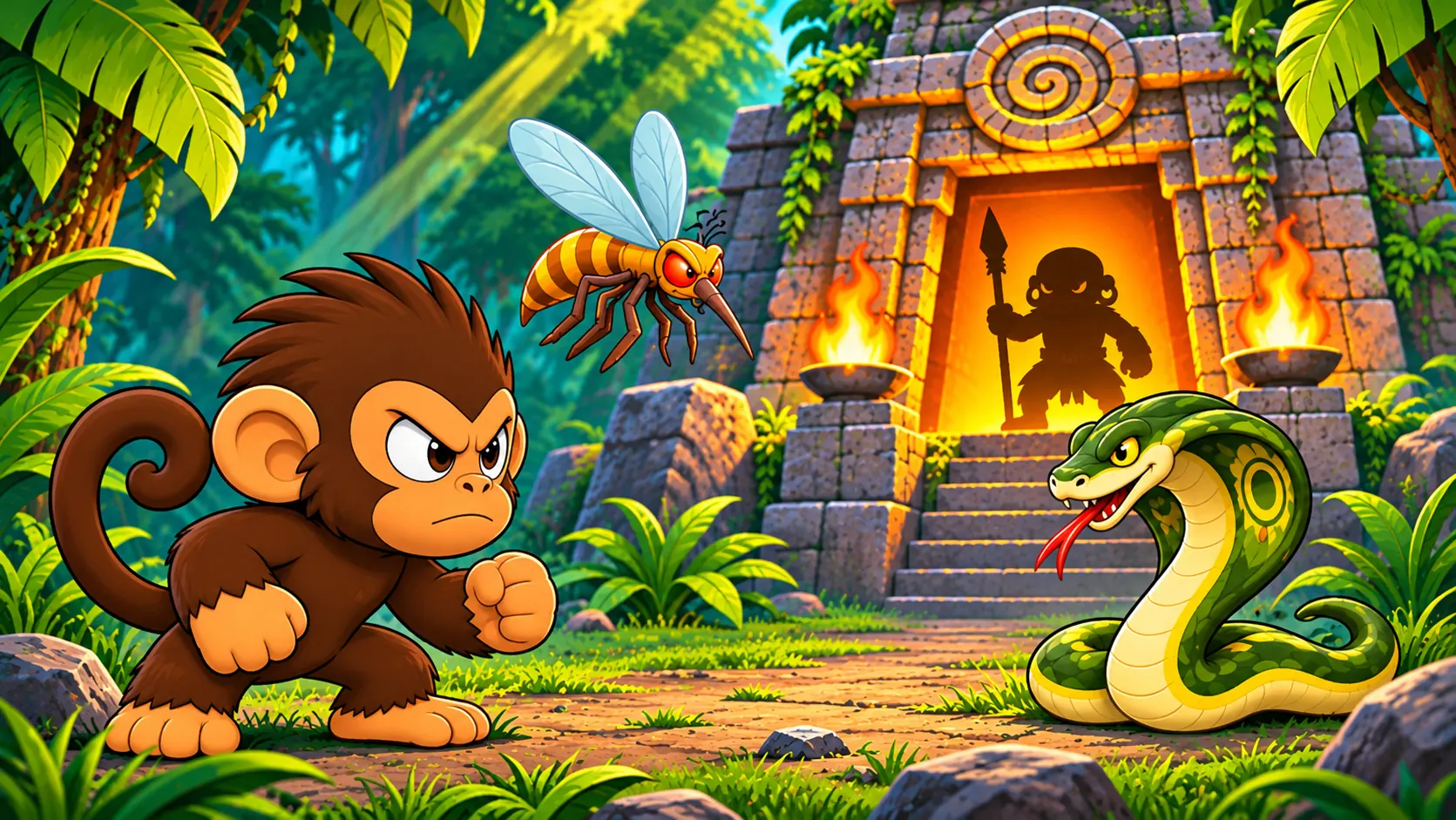
Island EvolutionJungle demo
Promotional artwork for Island Evolution showing Moko facing a snake, a mosquito and a jungle temple.

Featured project

Island Evolution

A solo-developed 2D action-platformer built in Godot 4 and GDScript for PC and Android.

Guide Moko through the Jungle, collecting seeds and activating runes as new abilities and enemy encounters reshape the route. The Jungle is the polished demo and the focus of this case study.

  • Godot 4
  • GDScript
  • 2D action-platformer
  • Android

Island Evolution Official Teaser

What I Built

Godot Architecture

I built GameState to coordinate level transitions, progression, and JSON saves.

Enemy AI and Difficulty

I built reusable enemy behaviors and tuned how encounters evolve across difficulties and Endless Evolution.

Android Gameplay

I built touch controls and added proximity-based activation to reduce unnecessary enemy processing.

Engineering case study

Software Architecture
& Game Systems

GameState acts as the persistent root scene, coordinating level loading, progression and shared gameplay systems. The Jungle level owns its objectives and encounters.

Jungle demo · Runtime relationships

Diagram loads when visible.

Jungle demo · Runtime relationships

Scroll sideways to see the full diagram. Use the arrow keys when the diagram is focused.

  • GameBalance supplies tuning data to GameState and enemy controllers.
  • Player modules bind to the HUD and refresh gameplay displays.
Player Architecture

Diagram loads when visible.

Player Architecture

Scroll sideways to see the full diagram. Use the arrow keys when the diagram is focused.

Scripts instantiated and configured by Player.

The demo also initializes modules for item and skill collection, animation, effects, healing, popups and the fire buff.

Enemy Architecture
  • Solid line: inheritance (base to derived)
  • Dotted line: module use

Diagram loads when visible.

Enemy Architecture

Scroll sideways to see the full diagram. Use the arrow keys when the diagram is focused.

Flight modules used by mosquito.gd

  • EnemyModFlightPatrol
  • EnemyModFlightOrbit
  • EnemyModFlightCharge
GameStateA persistent owner for each run
Challenge
Keep progression and player references coherent while replacing level scenes.
Implementation
GameState is the root startup scene. It swaps levels inside a pausable World node, tracks difficulty, lives, unlocks and score, and emits a signal when the active player changes.
Engineering benefit
Level scripts can own local encounters while reloads and transitions share one progression path.
GameBalanceData-driven encounter tuning
Challenge
Tune enemy roles and repeated runs from a consistent set of parameters.
Implementation
GameBalance holds role-based health, damage, speed, attack ranges, projectile settings and cooldowns. GameState calculates capped Endless multipliers. The ranged ground enemy combines its base firing interval and distance band with evolution modifiers and applies Endless cooldown and movement scaling.
Engineering benefit
Shared tuning data supports different enemy behaviors and makes scaling easier to review.
HUDSynchronizing gameplay and touch input
Challenge
Keep indicators and touch actions in sync when the player respawns or ability eligibility changes.
Implementation
The CanvasLayer HUD registers with GameState. A player module waits for the HUD and refreshes health, inventory and action eligibility. GameState updates lives, gameplay calls refresh displays directly, and the HUD counts down healing and fire indicators locally.
Engineering benefit
The HUD reflects the active player and can lock input during transitions.
Enemy AIShared behaviors, distinct enemy roles
Challenge
Reuse combat and targeting across enemies with different movement and attack patterns.
Implementation
Ground and flying controllers extend a shared enemy base. Modules implement targeting, patrol, melee and projectile attacks. Ranged enemies use distance bands, melee enemies close in, and healer snakes launch healing projectiles toward allies.
Engineering benefit
Enemy roles can share damage and activation behavior while retaining their own tactical rules.
PersistenceTwo ways to resume a run
Challenge
Support a restart at the unlocked level and a separate restore from a saved position.
Implementation
GameState writes two JSON records. Continue reads durable progression such as lives, difficulty and unlocks. Manual Load also restores the scene, coordinates, collected loot and defeated enemy IDs. Death deducts a life and clears run consumables before a reload. After game over, Continue resets lives and run resources.
Engineering benefit
The player can resume a saved session or start at the unlocked level with progression intact.
Scene ArchitectureReusable scenes and local orchestration
Challenge
Let the player, enemies, levels and interface evolve independently.
Implementation
Scenes compose physics bodies, areas, collision shapes, timers and reusable subscenes. Player modules handle movement, combat and damage. The Jungle script instantiates difficulty-specific enemy groups and connects objective signals while GameState coordinates scene changes.
Engineering benefit
Shared scenes can be reused while each level retains control of its objectives and encounters.

Player and encounter design

Gameplay Engineering

Debugging a Melee Attack That Wouldn't Trigger

The snake's movement and melee trigger used different distance measurements. Movement relied on horizontal separation, while the attack trigger checked total 2D distance. I aligned the melee trigger with horizontal separation while preserving the overall 2D detection range.

Player controller

The movement module handles jumps, unlockable double jumps, wall interactions and liana traversal. Landing logic tracks downward speed for fall damage.

Combat and abilities

Clac and Kick handle close-range attacks. Coconut shots consume ammunition. An unlocked fire buff selects a different projectile and changes damage while active.

Hits and cooldowns

Collision areas, masks and groups identify targets. Hit locks protect damage windows, while shot timing, ability cooldowns and eligibility checks govern actions.

Jungle boss

The King encounter stages the reveal before enabling combat. The boss combines spear throws and landing quakes with blocks and counterattack windows.

Jungle progression

Difficulty and Evolution

Each clear changes the next run through enemy groups, encounter rules or ability unlocks.

  1. Explorer

    The first Jungle run establishes the seed, rune and exit objectives. Clearing it unlocks Survivor and double jump.

  2. Survivor

    A different enemy group and environment change the route’s pressure and atmosphere. Clearing it unlocks King and the fire ability.

  3. King

    King activates its own encounters and difficulty-specific objects, including the staged Jungle boss fight.

Endless Evolution

After King, repeat runs retain the King rules and increase the evolution count. GameState uses that count and GameBalance settings to scale enemy health, damage, movement and projectile speed within configured caps. Cooldowns can shorten to configured minimums.

Mobile development

Android Development

Touch controls

The HUD connects touch actions for movement and combat to the same gameplay rules that govern input eligibility and ability cooldowns.

Conditional processing

A player-centered activation area wakes nearby enemies and sleeps distant ones. Sleeping disables processing and physics processing. A periodic proximity check also gates eligible effects.

Export and device testing

The project includes an Android export preset and uses the Compatibility renderer. The project notes describe testing exported builds on physical Android hardware and ongoing work on animation atlases, smoke and fire effects.

Extended game

Beyond the Demo Work in Progress

These unfinished environments extend Island Evolution with their own traversal and encounter prototypes. The full Jungle difficulty progression is still pending here.

Bringing Moko to Life Beyond the Game

I created this short by bringing a 3D version of Moko into my own living room, with a clear goal: build a stronger connection with the character and reinforce Island Evolution's identity.

My aim is to develop a weekly series of humorous shorts for the community while exploring new animation techniques and ways to promote the game.

Because developing an indie game also means learning how to get it noticed.

Open the Moko video

Technical Skills

Game development

  • Godot 4
  • GDScript
  • 2D gameplay
  • Scene management
  • Gameplay systems

Software engineering

  • Modular architecture
  • State management
  • Enemy AI
  • Debugging
  • JSON persistence
  • Performance optimization

Platforms and tools

  • Android
  • Git
  • GitHub
  • SvelteKit
  • TypeScript
  • Informatica ETL

Work and education

Professional Background

  1. 2024

    CGI

    Data Analyst Developer

    Data processing, Informatica ETL and database analysis in an Agile team.

  2. 2023–2024

    Simplon

    Application Development

    Training at French Bac+3/4 level.

  3. 2022–2023

    OpenClassrooms

    Web Development

    Training at French Bac+2 level.

  4. 2004–2018

    Retail management

    Team leadership

    Managed large teams and coordinated day-to-day retail operations.

Contact

Stéphane Morel

Godot Game Developer · Nantes, France

Open to remote Godot development opportunities, including employment and freelance collaborations.